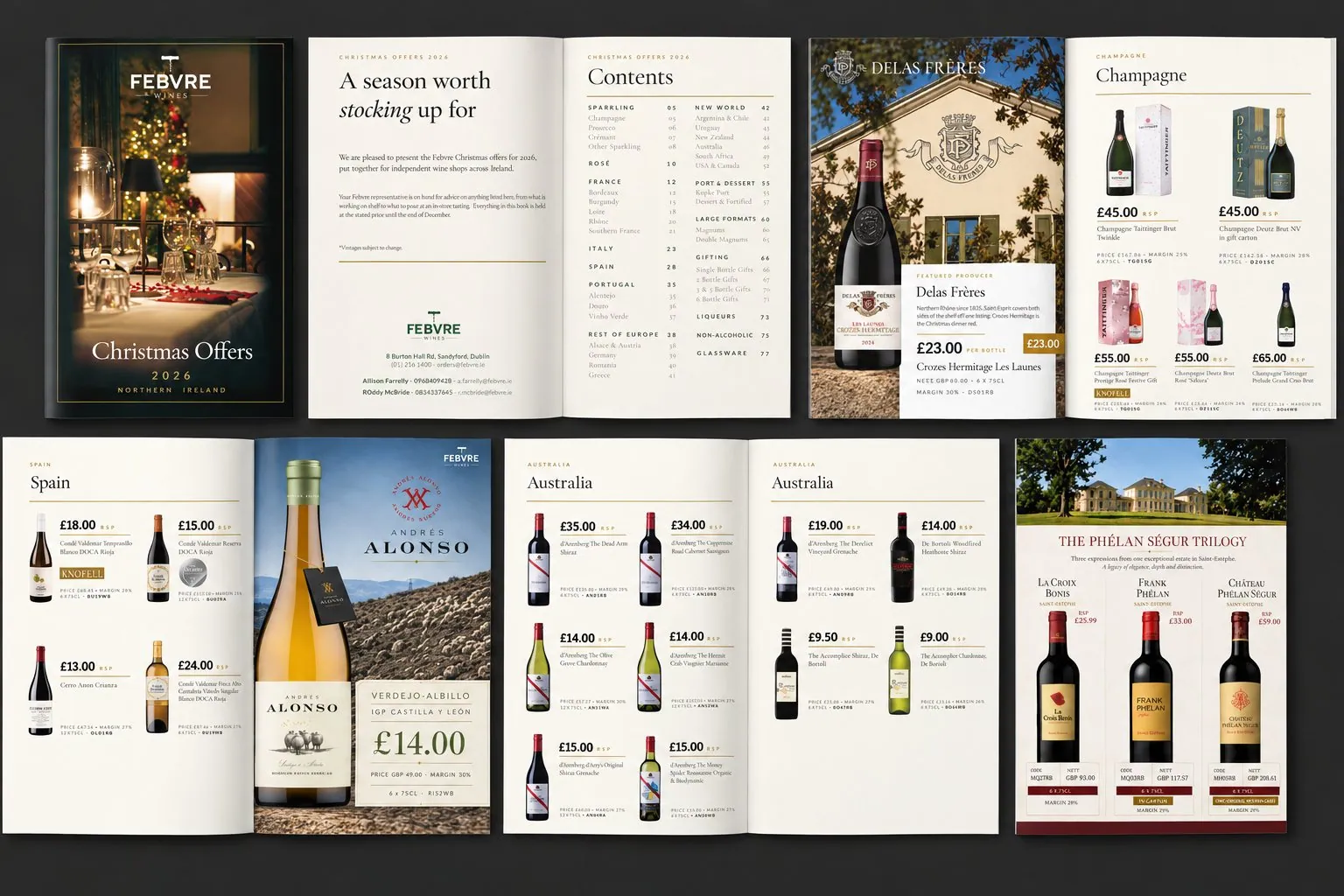
Christmas Offers 2026
An 80-page trade catalogue Febvre's sales reps take into off-licences ahead of Christmas. Around 400 wines, seven fields each.

The brief
Every year in the run-up to Christmas, Febvre gives its reps a printed book of seasonal offers to sell into the off-trade: independent wine shops and off-licences.
It sits open on a shop counter while a rep talks the owner through what to stock for December. It has to carry champagne houses and Bordeaux châteaux, and be fast to use: find the wine, read the shelf price, check the margin, take the order.
How it works
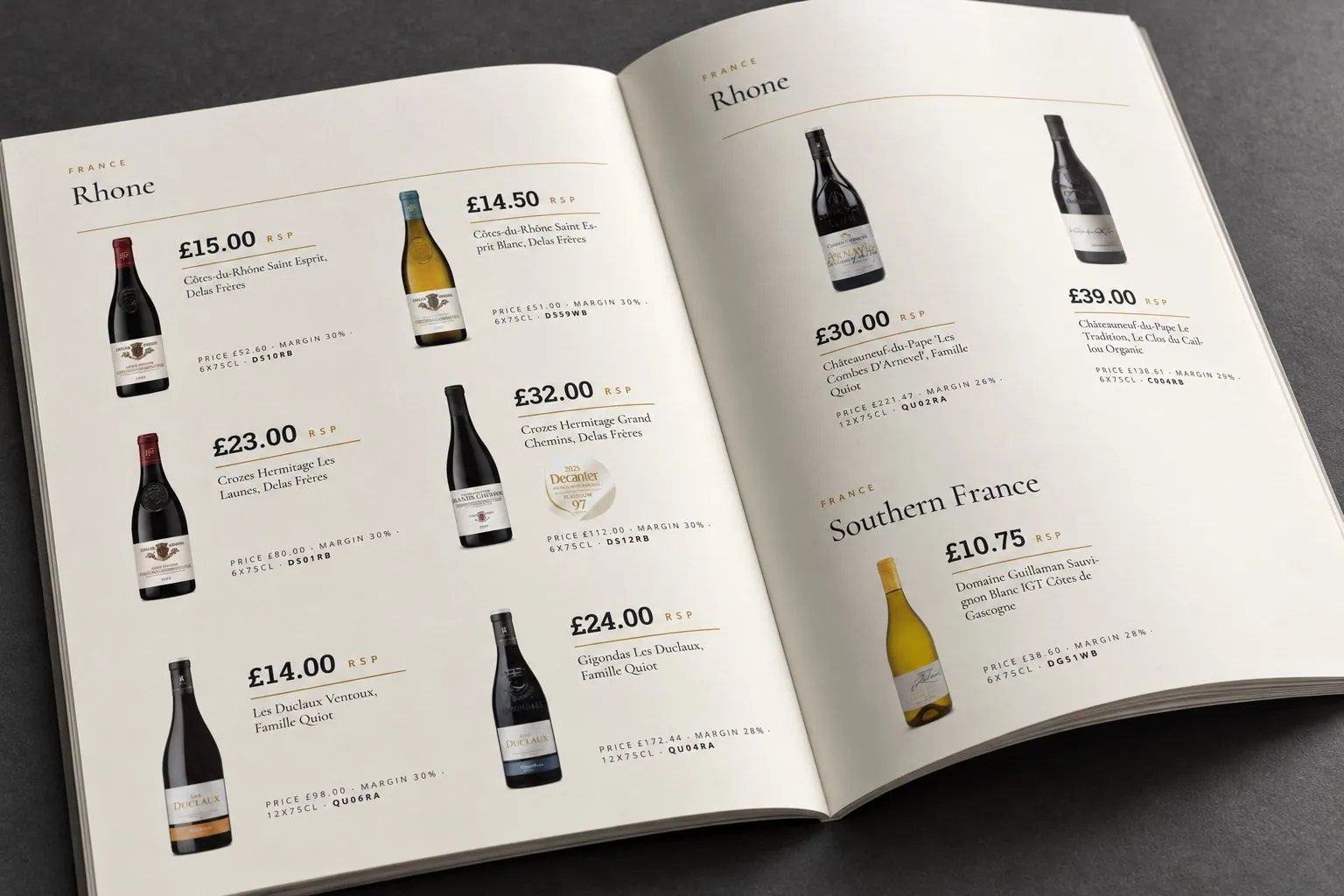
- Shelf price firstThe hierarchy follows the conversation at the counter: what it sells for, what it is, then the trade deal.
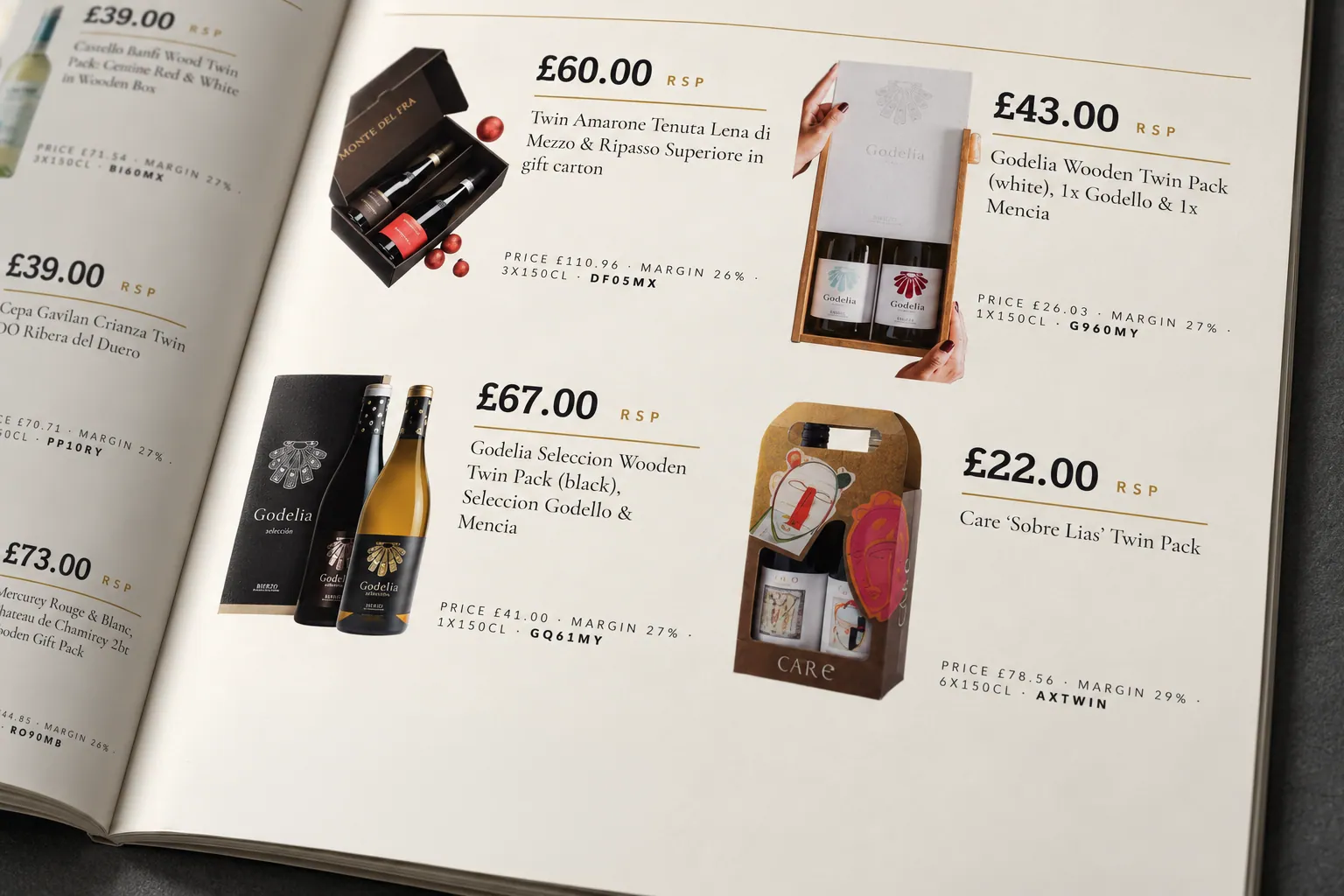
- A grid built by handEvery cell was placed manually on a strict modular grid, so long wine names break cleanly without knocking prices out of line.
- Producer pages as breaksFull-page features drop in where the product run gets repetitive, marking section changes.
- A quiet paletteCream stock, Cormorant serif and a single gold accent. With 400 different labels on the page, the bottles bring the colour.
The product pages
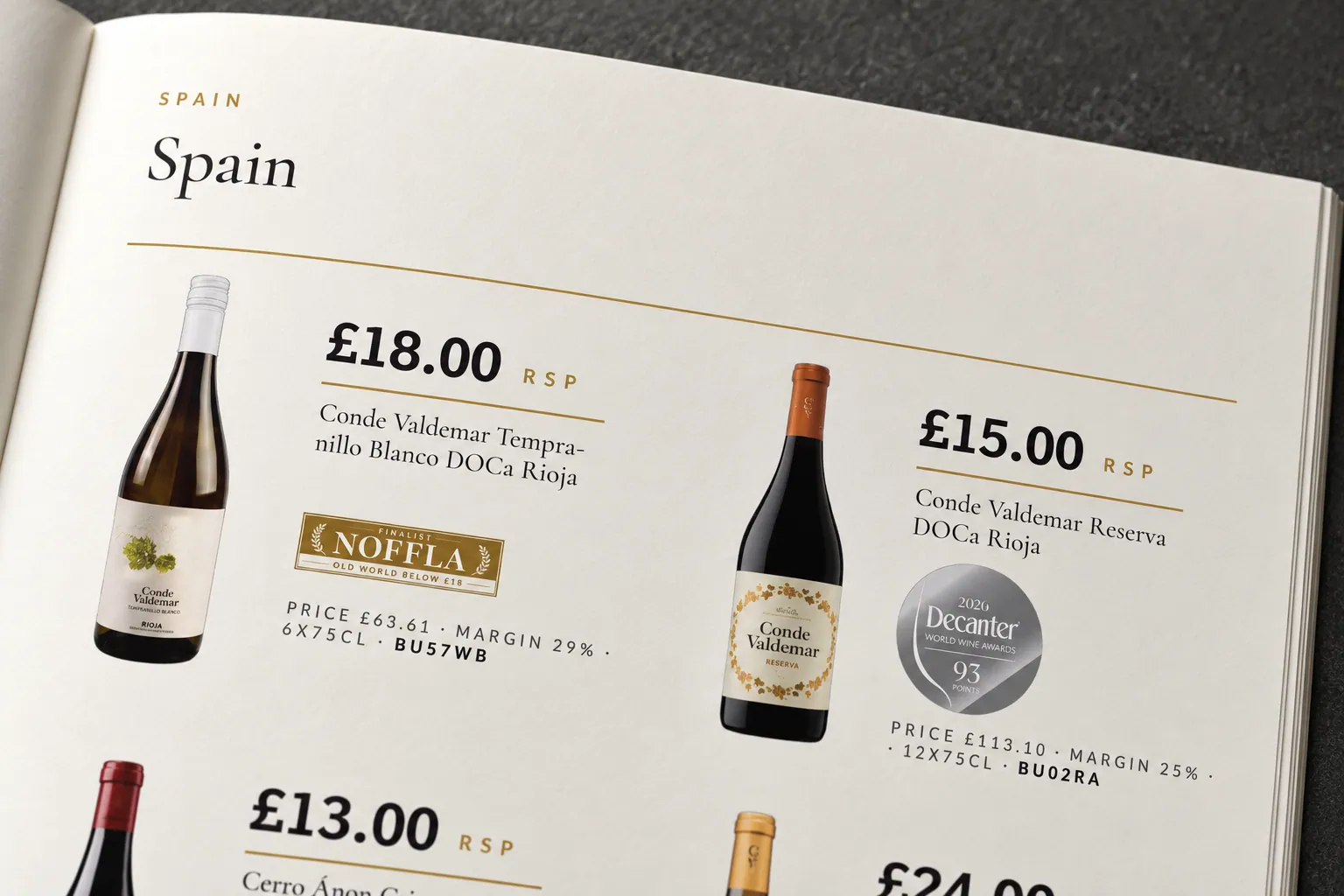
Each product carries the same seven pieces of information: bottle shot, RSP, product name, nett case price, margin, pack size and product code.
The RSP is the largest thing on the cell, set on a gold rule. Trade data sits underneath in small spaced capitals, with the product code in bold so reps can key orders straight in.
Producer features
Page after page of bottles on cream gets monotonous, and a rep flicking through loses track of where one section ends and the next begins.
Full-page producer features fix both: Delas Frères ahead of the Rhône, Andrés Alonso in Spain, 3 Wooly Sheep in New Zealand and the Phélan Ségur trilogy from Saint-Estèphe. Each one resets the eye and hands the rep a wine Febvre wants to push.



Outcome
Work started in late August. Three creative directions went to the internal sales meeting, and the selected one, Midwinter, carried through to print and into the reps' hands for the Christmas selling season.
- Faster turnaroundProduced in less time than previous editions; late price changes became a swap rather than a re-layout.
- Fewer correctionsFixed positions for every field meant fewer price and code errors reaching print.